Source Hex Head Self Tapping Wood Screws for Furniture, Decking, and Framing
Compare 30 listings for hex head self tapping wood screws from Chinese manufacturers. Buyers can evaluate materials like carbon steel and stainless steel, surface finishes such as zinc plating, and certifications including ISO and CE before requesting quotes.
Key considerations
Products List


Comprehensive Sourcing Guide
Strategic Sourcing Guide for Hex Head Self Tapping Wood Screws
Navigating the global market for hex head self tapping wood screws requires a disciplined approach that balances technical precision with supply chain reliability. These fasteners are critical components in construction, furniture manufacturing, and timber framing, where the ability to penetrate wood without pre-drilling offers significant efficiency gains. The core keyword, hex head self tapping wood screws, encompasses a diverse range of products varying in material composition, surface treatments, and adherence to international standards. Buyers must move beyond generic descriptions to verify specific attributes that ensure the fasteners meet the structural demands of their projects. This guide outlines the essential factors for sourcing these components effectively, relying on verified product attributes and established industry practices.
Technical Specifications and Material Composition
The performance of a hex head self tapping screw is fundamentally dictated by its material and geometric design. In the observed market data, the primary materials identified are carbon steel and stainless steel. Carbon steel variants are often selected for general construction where cost-effectiveness is paramount, while stainless steel is preferred for applications requiring corrosion resistance in outdoor or humid environments. The material grade is a critical specification; for instance, carbon steel screws are frequently categorized under grade 4.8, indicating specific tensile strength properties. Buyers must verify the grade against their load-bearing requirements, as lower grades may fail under high stress.
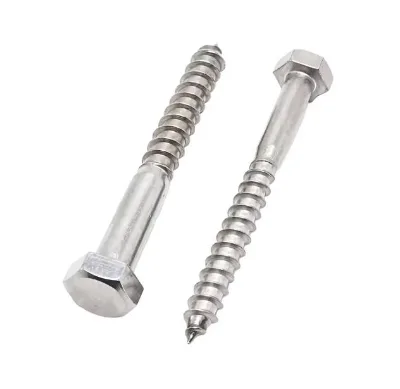
The head style is another defining characteristic. While the market offers round heads, the specific requirement for hex head screws provides a distinct advantage: the ability to drive the fastener with a wrench or socket, delivering higher torque without stripping the head. This is particularly useful for large-diameter screws used in heavy timber framing. The groove configuration is also significant; hexagonal grooves are commonly observed, which aids in the self-tapping action by allowing the screw to cut its own thread into the wood material. The point design, often described as sharp self-drilling, ensures rapid penetration. However, the diameter and length must be matched to the wood density. Specifications observed in the market range from small diameters like 2.9mm up to larger sizes such as 6.3mm, with some listings indicating sizes up to 4 inches for specialized heavy-duty applications.
Compliance and Certification Verification
In the fastener industry, compliance with international standards is non-negotiable for ensuring safety and interoperability. The supplied product data indicates that manufacturers often adhere to a wide array of standards, including GOST, GB, DIN, ANSI, BSW, and JIS. This diversity presents a challenge for buyers who must ensure the screws they procure match the specific standard required by their local building codes or project specifications. For example, a project in Europe may strictly require DIN standards, while a project in North America might mandate ANSI specifications.
Certification serves as a third-party validation of these standards. The market data highlights several key certifications, including ISO, GS, RoHS, CE, and ISO9001. ISO9001 certification is particularly important as it indicates that the manufacturer has a quality management system in place, ensuring consistent production processes. The presence of CE and RoHS certifications suggests compliance with European safety and environmental directives, which is essential for exporting to or sourcing within the European Union. Buyers should not assume that a product listing implies full compliance; instead, they must request specific test reports or certificates of conformity that explicitly reference the relevant standard and certification body. The absence of these documents should be treated as a red flag, regardless of the supplier's claims.
Cost Drivers and Pricing Structures
Understanding the cost drivers for hex head self tapping wood screws is essential for budgeting and negotiation. The primary factors influencing price include the raw material cost, which fluctuates based on the global market for steel and stainless steel. The choice between carbon steel and stainless steel creates a significant price differential. Additionally, the surface finishing process adds to the cost; options such as zinc plating, yellow zinc plating, or bright galvanized finishes require additional chemical treatments and energy.
The packaging method also impacts the final unit cost. Data shows a range of packaging options from bulk packing to small boxes packed in cartons, or palletized shipments. Bulk packing is generally more cost-effective for large-volume orders, while individual box packaging may be necessary for retail or smaller construction sites. The Minimum Order Quantity (MOQ) is another critical cost driver. The observed MOQ range is extensive, spanning from 1 unit to 100,000 units, with some suppliers specifying a weight-based MOQ such as 1 ton. Buyers with smaller requirements may face higher per-unit costs or need to consolidate orders with other buyers to meet the supplier's threshold.
Furthermore, the price terms, such as EXW (Ex Works), FOB (Free on Board), and CIF (Cost, Insurance, and Freight), determine who bears the logistics costs. EXW prices are lower but require the buyer to manage all shipping and insurance, whereas CIF prices include these costs but are higher. Buyers must calculate the total landed cost, including freight, duties, and insurance, rather than focusing solely on the unit price.
Typical Applications and Performance Requirements
Hex head self tapping wood screws are versatile fasteners used across various sectors. Their primary application is in woodworking and construction, where they are used to join timber frames, deck boards, and structural elements. The self-tapping feature eliminates the need for pre-drilling, which significantly reduces labor time and costs on large projects. The hex head design allows for high torque application, making these screws ideal for securing heavy loads or in situations where vibration might loosen standard Phillips or flat-head screws.
The specific application dictates the required material and finish. For indoor furniture or dry environments, carbon steel with a standard zinc or yellow zinc plating is often sufficient. However, for outdoor decking, marine environments, or areas with high humidity, stainless steel or heavily galvanized carbon steel is necessary to prevent rust and structural failure. The diameter and length of the screw must be selected based on the thickness of the wood being joined. For instance, a 4.8mm to 6.3mm diameter screw is suitable for general framing, while larger sizes up to 4 inches are reserved for heavy timber construction. Buyers should also consider the presence of washers; some listings mention self-drilling screws with rubber washers, which provide a watertight seal and distribute the load over a larger area, preventing the screw head from pulling through the wood surface.
Supplier Evaluation and Geographic Considerations
When evaluating potential suppliers, geographic origin plays a significant role in logistics and quality perception. The market data indicates that a substantial portion of these products originates from China, with specific manufacturing hubs identified in Zhejiang and Zhuji, as well as Tianjin. These regions are known for their robust fastener manufacturing capabilities. However, the concentration of suppliers in these areas means buyers must conduct rigorous due diligence to distinguish between high-quality manufacturers and those offering substandard products.
Supplier evaluation should focus on their ability to provide samples, which are often offered for free to allow buyers to test the product's performance. The ability to customize the product is another key indicator of a supplier's flexibility and capability. The data confirms that customization is available, allowing buyers to request specific lengths, diameters, or finishes. Buyers should also assess the supplier's lead times, which in the observed data range from 15 to 20 days. This timeframe is critical for project planning, and any delays can impact the overall construction schedule.
Quality Control and Inspection Protocols
Implementing a robust quality control (QC) protocol is essential to mitigate the risks associated with sourcing fasteners from overseas. Given the wide range of observed specifications, from standard sizes to custom requirements, buyers must define clear acceptance criteria before production begins. Key inspection points include verifying the head style, groove configuration, and surface finish. The presence of a sharp self-drilling point and the correct thread pitch must be confirmed through physical testing.
Visual inspection should be conducted to check for defects such as burrs, uneven plating, or damaged threads. Dimensional accuracy is also crucial; the diameter and length must fall within the specified tolerances. For high-volume orders, third-party inspection services can be employed to verify that the production batch matches the approved sample. The certification status, particularly ISO9001, should be validated to ensure the manufacturer maintains consistent quality control processes. Buyers should also request material test reports to verify the grade of the steel and the thickness of the plating, ensuring the fasteners meet the required corrosion resistance and tensile strength specifications.
Long-Term Procurement Considerations
Sourcing hex head self tapping wood screws is not merely a transactional activity but a strategic partnership that requires long-term planning. Buyers should consider the scalability of their supply chain, ensuring that the supplier can handle increased order volumes as their projects grow. The flexibility of the supplier to accommodate custom requirements and changes in specifications is vital for adapting to evolving project needs.
Relationship management is also key. Maintaining open communication with the supplier regarding quality issues, delivery schedules, and market trends can help prevent disruptions. Buyers should establish clear terms for returns and replacements in case of quality failures. Additionally, staying informed about changes in international standards and regulations is necessary to ensure continued compliance. By focusing on these long-term factors, buyers can build a resilient supply chain that delivers high-quality hex head self tapping wood screws consistently, supporting the success of their construction and manufacturing projects.
FAQs
What materials are used for hex head self tapping wood screws?
These screws are primarily manufactured from carbon steel and stainless steel. Carbon steel is selected for general construction due to cost-effectiveness, while stainless steel offers superior corrosion resistance for outdoor or humid environments.
Which international standards do these screws typically meet?
Manufacturers often adhere to a wide array of standards including GOST, GB, DIN, ANSI, BSW, and JIS. Buyers must verify the specific standard required by their local building codes or project specifications before procurement.
Can I request customization for these fasteners?
Yes, customization is available for specific lengths, diameters, or finishes to match client requirements. Suppliers can adjust packaging from bulk to small boxes and modify surface finishes like zinc plating or yellow zinc plating.
What certifications should I look for in a supplier?
Key certifications include ISO, GS, RoHS, CE, and ISO9001. ISO9001 indicates a quality management system, while CE and RoHS suggest compliance with European safety and environmental directives for export markets.
How are these screws packaged for shipment?
Packaging options range from bulk packing to small boxes packed in cartons or palletized shipments. Suppliers may offer 20kg or 25kg per carton, or customize packaging based on specific client requirements.
What is the typical lead time for delivery?
The observed delivery time ranges from 15 to 20 days for standard orders. Buyers should account for this timeframe in their project planning and confirm specific schedules with the supplier before finalizing the order.
What are the common size specifications available?
Sizes vary from small diameters like 2.9mm up to larger sizes such as 6.3mm, with some listings indicating sizes up to 4 inches. Specific models range from M1-M6 for smaller applications to heavy-duty variants.